MEDIA RELEASE
Friday 9 October
Courageous Conversations and Fresh Perspectives Set the Tone at Forestry Australia Symposium
Courageous conversations, fresh perspectives and a willingness to listen were among the defining features of Forestry Australia’s 2026 Symposium, which brought together nearly 280 delegates in Canberra this week.
Held at the Rex Hotel from 7–9 October, the Symposium generated considerable enthusiasm as delegates explored how the forestry profession can strengthen community trust, learn from past experiences and engage more effectively with the broader community.
Under the theme The forestry story: Strategies for improved awareness, social licence and effective engagement, the program deliberately brought together voices from within and beyond forestry, providing opportunities to learn from others, reflect on how trust is built and consider new approaches to communication and engagement.
Forestry Australia Chief Executive Officer Jacquie Martin said one of the most encouraging aspects of the Symposium had been the energy and enthusiasm delegates brought to the discussions.
“There has been a real buzz around the Symposium this week. People have been genuinely enthusiastic about the conversations taking place and the opportunity to be part of them,” Ms Martin said.
“We deliberately created a program that would encourage us to reflect on how we build and maintain trust, learn from the experiences of others and consider what we might do differently.”
“What has been particularly encouraging is the willingness of delegates to listen, share experiences and reflect on what they’ve heard.”
“These are important conversations for our profession, and some require courage. We won’t always agree on everything, but being willing to engage openly and respectfully is an important part of building understanding and trust.”
Ms Martin said the Symposium had highlighted the value of learning from how others communicate and connect with their communities.
“As forestry professionals, we bring considerable knowledge, experience and a genuine commitment to manage, study and care for forests. But community trust isn’t something we can simply expect because of our expertise. It takes time, and it’s something we need to continue to earn through our actions, our relationships and the way we engage with others.”
“We’ve heard some great examples of how others communicate, tell their stories and build genuine connections. It’s given us plenty to reflect on about how we tell the forestry story and continue to build trust and understanding.”
Learning from others
Symposium Convenor and Forestry Australia Director Matt de Jongh said bringing speakers from outside forestry was a deliberate and valuable part of the program.
“We wanted people to hear from others who have faced similar challenges, explore different approaches and reflect on what we can learn from their experiences,” Mr de Jongh said.
“The engagement throughout the Symposium has been fantastic. It’s clear these are conversations people want to have, and there is a real appetite to take them further.”
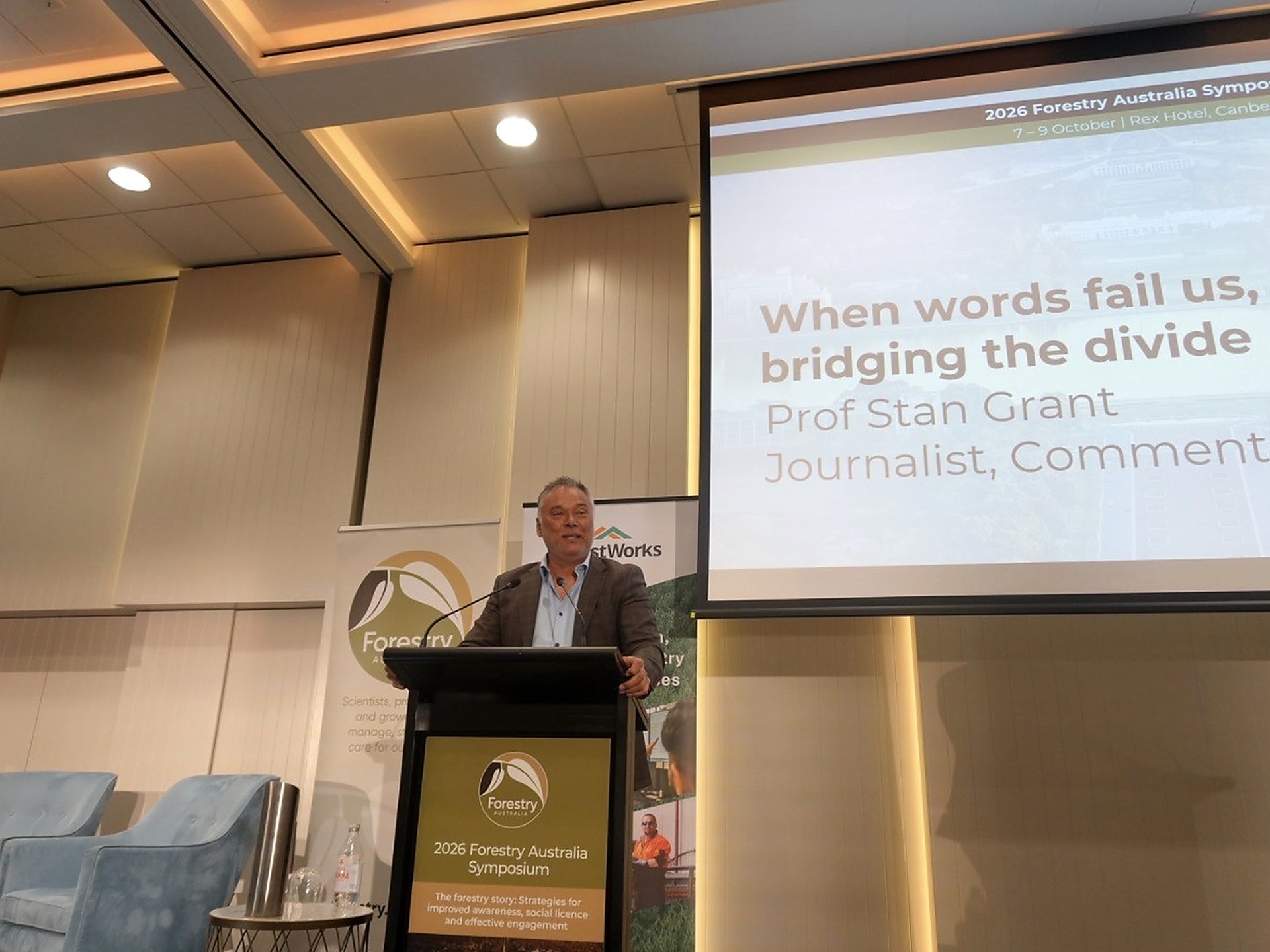
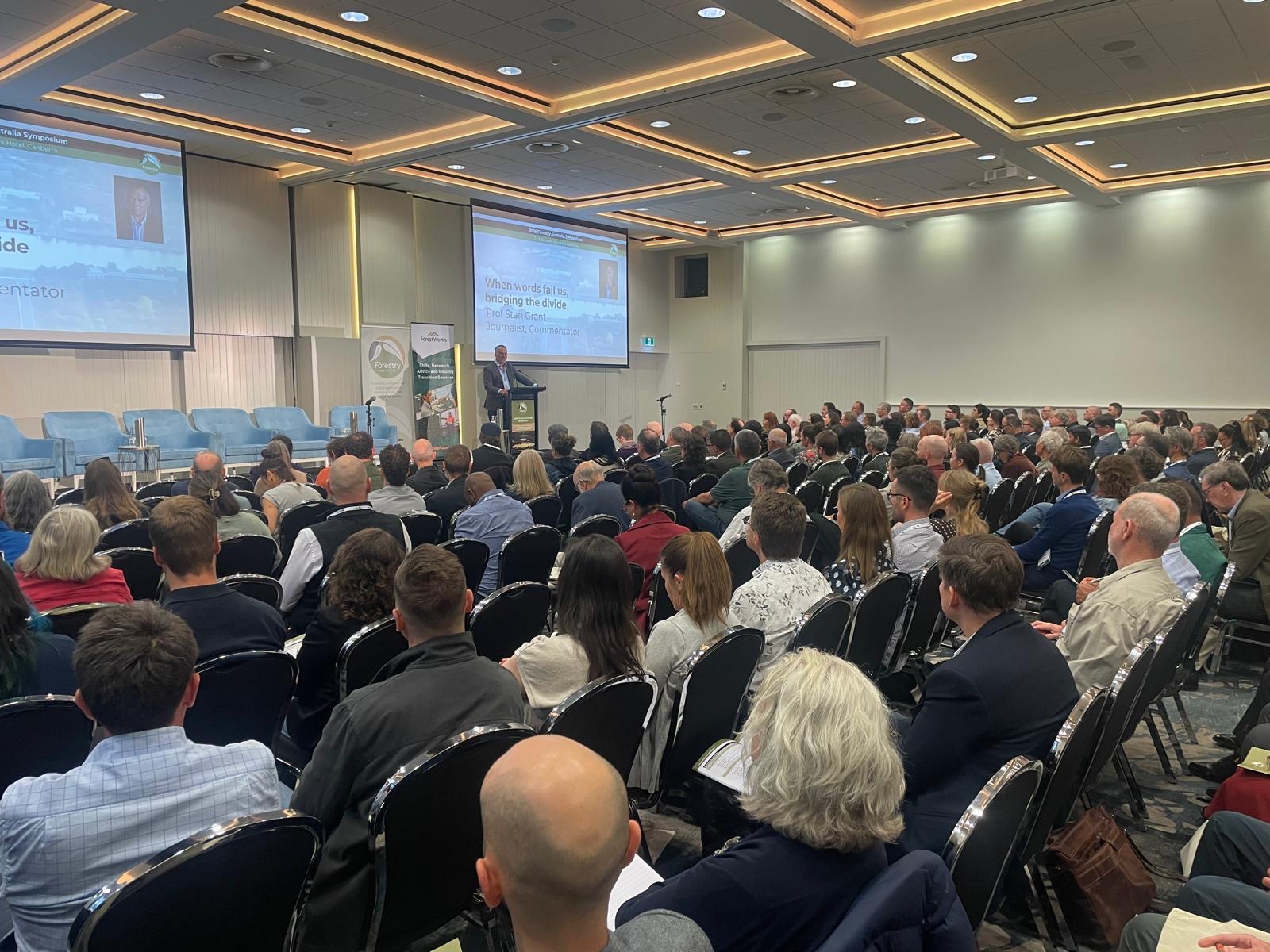
The Symposium opened with a keynote address from Walkley Award-winning journalist, author and Wiradjuri man Professor Stan Grant, who spoke on When words fail us, bridging the divide.
Dr Simon Longstaff AO of The Ethics Centre challenged delegates to consider what would need to be true for forestry to have trust, while Dr Amanda Cahill of The Next Economy explored the changing expectations surrounding social licence.
Research presented by Giselle Stollznow of Stollznow Research provided insights into public perceptions of forestry, while speakers from farming, mining and energy shared their experiences of communicating and engaging with communities.
The program also explored lessons from past forest management decisions, politics and advocacy, effective communication, and the role of First Nations knowledge, leadership and enterprise.
A discussion involving participants of the Forest Congress, convened by Hobart’s Museum of Old and New Art (MONA), demonstrated how people with very different backgrounds and views on forest harvesting can come together for open and constructive conversations about the future of Tasmania’s forests.
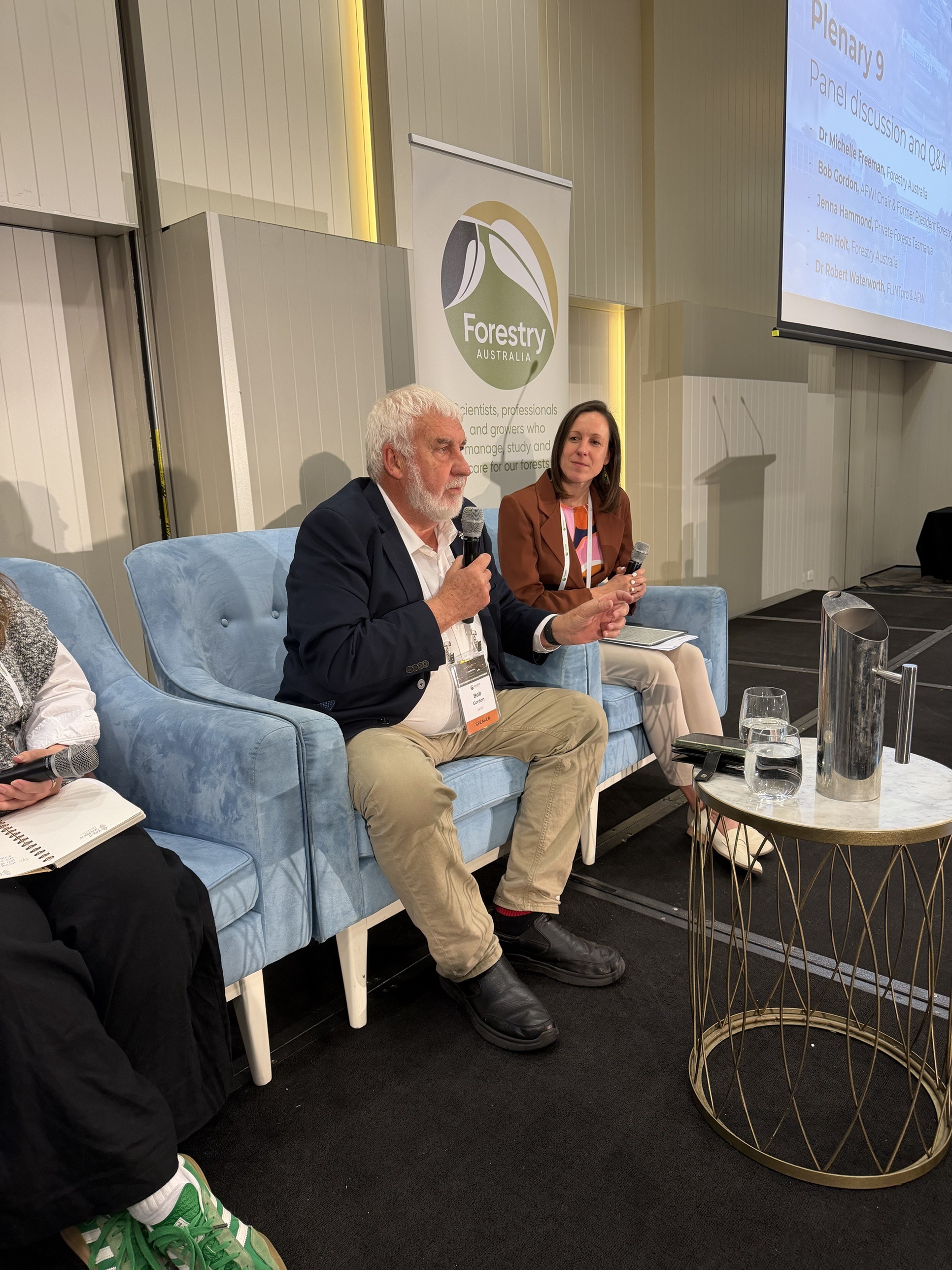
The value of these conversations was reinforced during the Symposium’s closing panel, with former Forestry Australia President and Australian Forest and Wood Innovations (AFWI) Chair Bob Gordon reflecting on how much the profession had evolved. “I don’t think we could have had a session like this 10 years ago,” Mr Gordon said.
“There wouldn’t have been enough willingness in the room to listen to different viewpoints, to engage in a discussion outside our comfort zone.”
Taking the forestry story forward
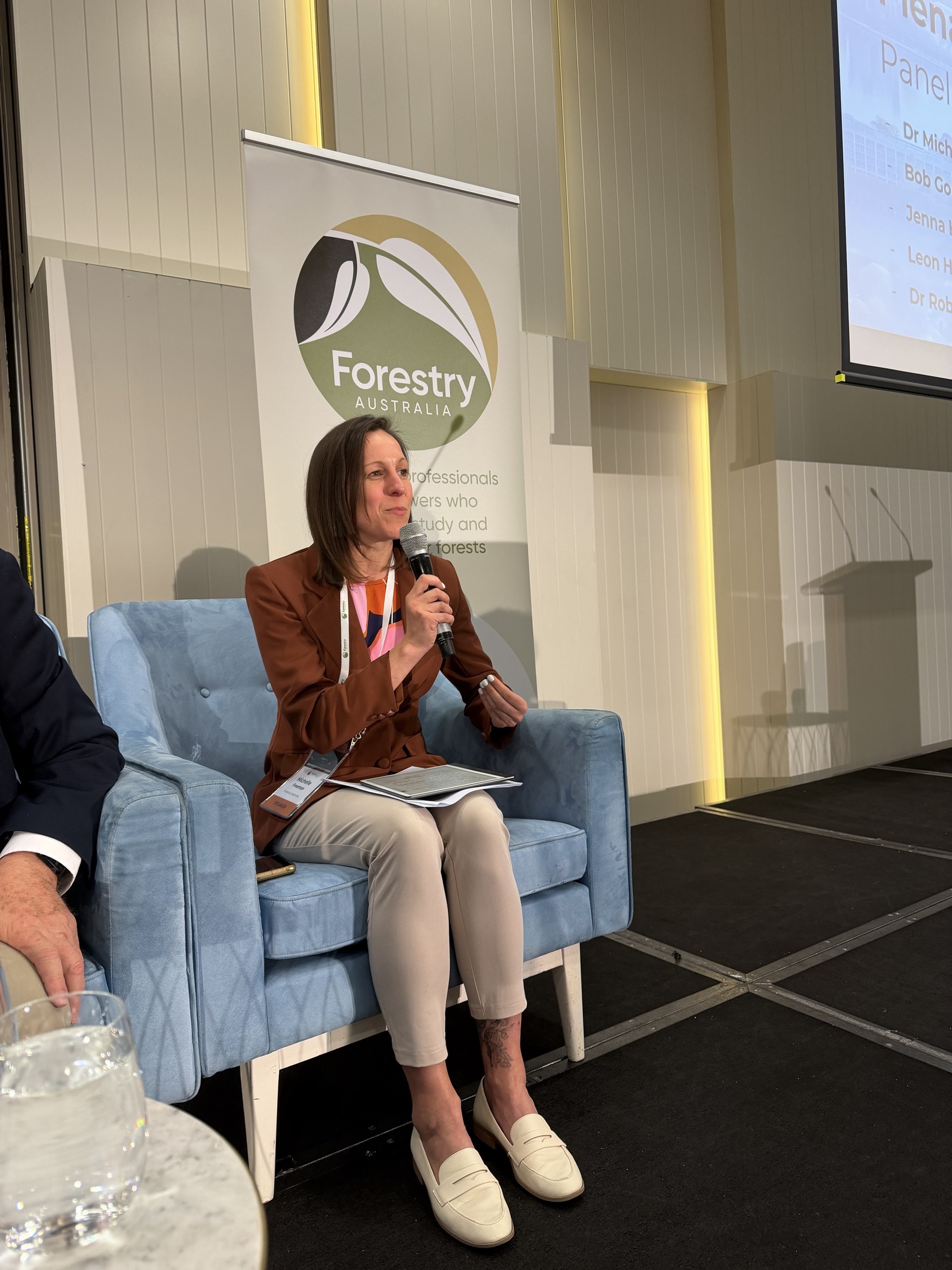
The closing panel, chaired by retiring Forestry Australia President Dr Michelle Freeman, also considered what delegates could take from the discussions and how the profession might build on them.
Forestry Australia Director Leon Holt emphasised the importance of community trust as a foundation for forest management. “We’ve got to place our trust in the community and put gaining their trust at the forefront of what we do,” Mr Holt said. “It’s actually a precursor, a prerequisite for us to be able to do anything in the forest.”
Drawing on the words of forest economist Jack Westoby in 1967, he reminded delegates that “forestry is not about trees, it is about people. And it is about trees only insofar as trees can serve the needs of people.”
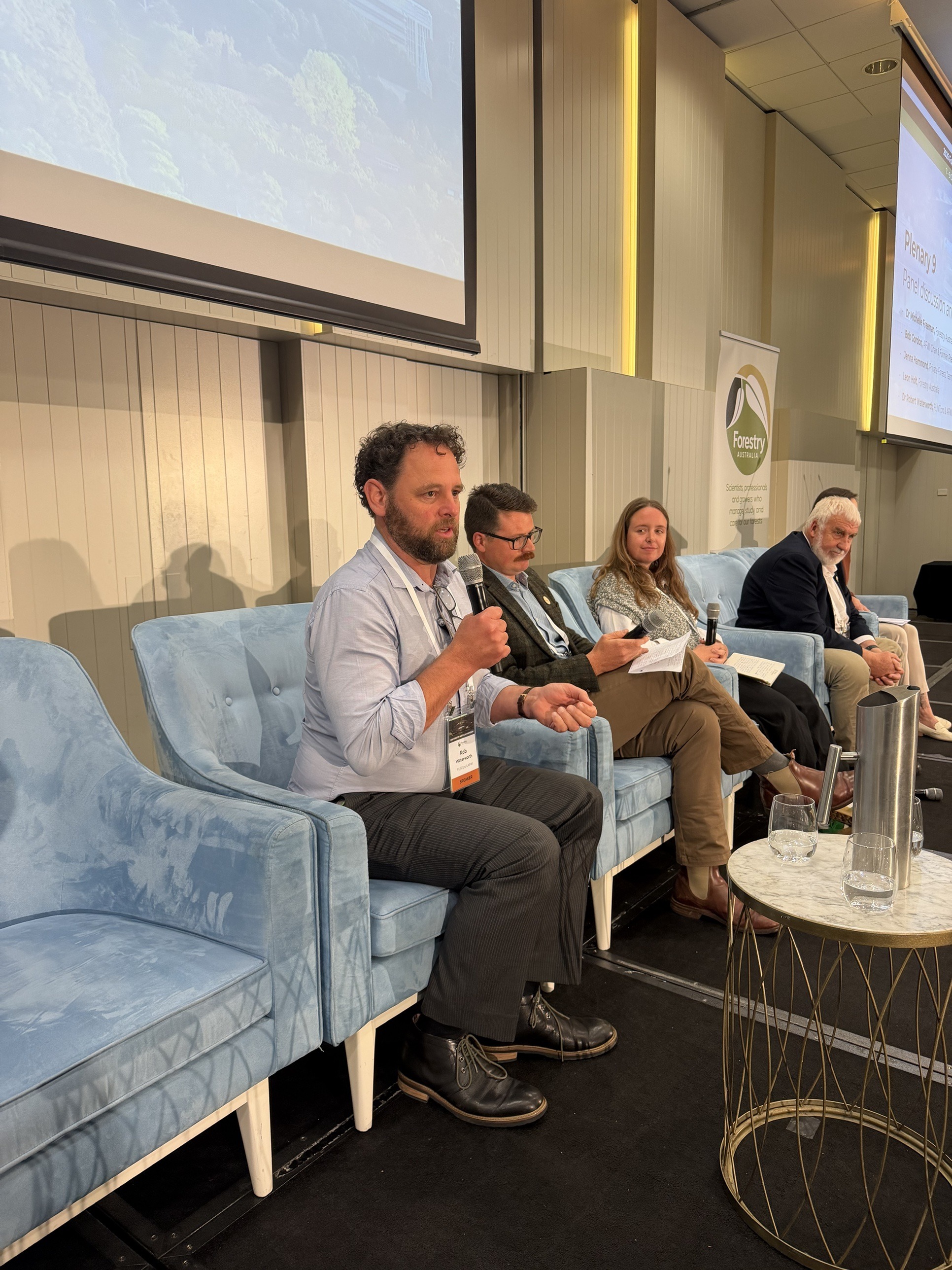
Jenna Hammond of Private Forests Tasmania encouraged delegates to recognise the value of small steps in building community connections, while Dr Robert Waterworth of FLINTpro and AFWI reflected on the breadth of conversations the Symposium had opened up.
Dr Freeman reminded delegates that forestry is “the art and science of caring for forests for all their values”, extending well beyond timber production.
Ms Martin said the Symposium had reinforced the strength and diversity of the forestry profession, and the value of bringing people together to learn from one another.
“Our members work across research, conservation, fire management, biodiversity, carbon, environmental services, timber production and many other areas. That breadth of experience is one of the real strengths of Forestry Australia.”
“What has stood out this week is how much delegates have valued the opportunity to be part of these conversations. The discussions have continued well beyond the sessions, and there’s been a genuine sense of enthusiasm about what we can take away from the experience.”
“The opportunity now is to build on that momentum. I hope delegates leave Canberra with new connections, ideas they can put into practice and a renewed commitment to engaging with the communities who care about our forests.”
“These aren’t conversations that end when the Symposium finishes. In many ways, they’re just getting started.”
The Symposium concludes today with five field trips exploring forest management, research and practical challenges across the Canberra region.
Forestry Australia thanks its speakers, delegates, volunteers, sponsors and partners for their contribution to the Symposium.
Click here to download nine separate images from the Symposium:
- Dr Michelle Freeman chairs the Symposium’s closing panel
- Professor Stan Grant delivers the keynote, When words fail us, bridging the divide
- Dr Robert Waterworth on the closing panel
- Former Forestry Australia President Bob Gordon on the closing panel
- Dr Simon Longstaff AO of The Ethics Centre delivers his keynote address
- Phil Thompson, Native Secrets and AFWI Director, at the First Nations breakout
- Participants in MONA’s Forest Congress on collaboration and native forests
- Delegates at the closing panel, seen from the stage
- A packed room for Professor Stan Grant’s opening keynote
ENDS
For further information: Jason Ross, Marketing & Communications Manager, M: 0448 190 055
ABOUT FORESTRY AUSTRALIA
Forestry Australia is a not-for-profit professional association representing more than 1,100 forest scientists, managers, professionals and growers. Operating across native forests, plantations, farm forestry and environmental services, our members bring deep scientific knowledge and practical experience in forest, fire, carbon, tree-growing and landscape management. Through their work, they study, manage and care for Australia’s forests and are committed to delivering positive environmental, social, cultural and economic outcomes across all forest types and land tenures.