
WEBINAR | Active Management – what is it and how might it be implemented?
As part of the International Day of Forests celebration on 21 March, Forestry Australia invites you to our upcoming webinar on Active Forest Management, which will provide an overview of the recent review of active management.
Despite its widespread use in policy documents, the term ‘active forest management’ is not well defined. The webinar will present a recently developed definition of active forest management and how it applies in different operational contexts by forest managers with different viewpoints, world views and philosophies. Active management is defined as the human activities carried out in forests to achieve various purposes and goals within broader operational frameworks that support overarching aspirations and desired outcomes.
Supported by select case studies, the webinar will highlight key considerations for implementing active management in Australia’s temperate forests in the coming decades.
Date: Friday 21 March | Time: 12:30 – 1:30pm (AEDT)
Chair: Professor Rod Keenan | RFP CPD Points: 1.00
Everyone who registers:
- Receives a link and joining instructions 24 hours before the webinar commences
- Receives a recording of the webinar – so if you can’t listen live, you can listen later
Forestry Australia Member: $10 | Non-Member: $60 | Student members: Free
Registrations close: 10am, Thursday 20 March
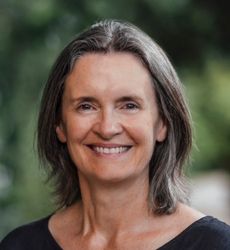
Associate Professor Lauren Bennett
Lauren is a Principal Research Fellow at the University of Melbourne with research interests in ecosystem processes, fire ecology, carbon cycles, and adaptive management. She has many years of experience working in applied research relating to vegetation, fire and climate interactions with diverse collaborators including government agencies, Traditional Owner groups and industry. Lauren’s research is supported by the Victorian Department of Energy, Environment and Climate Action through the Integrated Forest Ecosystem Research (IFER) program, with a current focus on adaptation pathways. She is a Co-Chair of the inter-disciplinary Wildfire Futures Hallmark Research Initiative and likes bringing concepts and insights from different disciplines together including from Ecological Restoration, which she has taught at Masters level for many years.
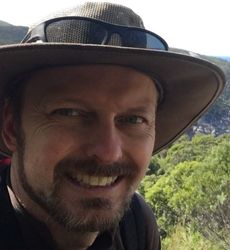
Professor Craig Nitschke
An academic at the University of Melbourne with 19 years’ experience, Craig has published over 100 peer-reviewed journal articles in the fields of forest, fire, plant, animal, and landscape ecology, dendroecology, ecological modelling, biodiversity conservation, social-ecological systems, climate change impacts and adaptation, sustainable forest management, remote sensing, and climatology. Craig has worked closely with governments, industry, and NGOs to generate knowledge and understanding that supports policy development and management. He has worked extensively with the Department of Energy, Environment and Climate Action in the State of Victoria through the Integrated Forest Ecosystem Research program which he now leads on behalf of the University of Melbourne. He has, and is currently, participating in numerous projects within Australia and overseas (Bhutan, Canada, Indonesia, Nepal, Papua New Guinea, and Taiwan). Craig is currently a non-practicing registered professional forester with Forest Professionals British Columbia (Canada).

Dr Rebecca Ford
Rebecca Ford is an honorary Senior Fellow at the University of Melbourne and an adjunct researcher at Tribhuvan University, Nepal. She draws on psychological and interdisciplinary frameworks to study people and their interactions with forests and forest and fire management by observing aspects such as values, human-forest relationships, social licence, institutions and decision-making.
With thanks to our 2025 Webinar Program Sponsors:
