
LETTER TO THE EDITOR
Wednesday 23 September
The Senate Saved the Forest Carbon Method. It Did Not Fix It.
By Dr Michelle Freeman, President, Forestry Australia
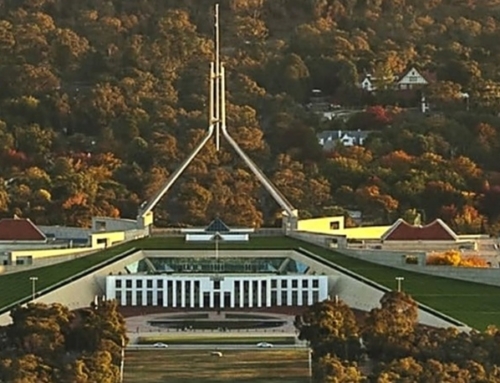
The Senate has made a political decision to allow the Improved Native Forest Management (INFM) Method, which credits carbon for reducing or ending timber harvesting in native forests, to stand. The vote reflects the environmental ideologies that drive Australian politics.
The decision does not settle the question of the Method’s integrity, nor does it verify that the maths adds up.
For more than a year, Forestry Australia has raised detailed technical concerns through multiple channels about how the INFM Method calculates carbon abatement. We have the analysis that supports those concerns and have offered to work constructively with government and stakeholders to resolve the problems.
Our members include some of Australia’s foremost forest carbon experts. Their independent analysis identified material accounting concerns.
None were addressed in the Senate debate, and none have yet been fixed.
The maths and integrity of the INFM Method should have formed the basis of the decision, but the long-standing and highly emotive debate about native forest harvesting ultimately prevailed. The problem is that a politically convenient outcome, such as ending native forest timber harvesting, does not automatically create a genuine carbon credit.
Australian Carbon Credit Units (ACCUs) are the currency of climate policy.
Businesses buy them to meet obligations or offset emissions. Governments rely on them to help meet Australia’s emissions targets. Landholders and investors make long-term decisions based on their value.
If an ACCU says one tonne of carbon abatement has occurred, the system must be able to demonstrate that one tonne really has occurred.
The Greens announced their support for INFM under the headline “Real pollution cuts, not accounting tricks,” while simultaneously announcing opposition to a Bill intended to strengthen the governance, transparency and integrity of the ACCU scheme and announcing an intention to disallow a private land method that has been transparently developed through many years of co-design involving scientists, agricultural organisations, carbon practitioners, conservation organisations, governments and land managers.
At the same time, they have supported an INFM Method that has lacked transparent process, was not developed with forestry experts and has material technical issues that remain unanswered. The irony is difficult to miss.
Poor-quality credits have consequences.
If an ACCU overstates the carbon benefit achieved in a forest, a real tonne of emissions elsewhere in the economy may be offset by something less than a real tonne of abatement.
Further, large volumes of inexpensive, over-credited ACCUs can also suppress the carbon price and make it harder for genuinely additional projects, including new plantations, environmental plantings, farm forestry and landscape restoration, to attract investment. These are investments Australia desperately needs.
We should be designing carbon markets that help put more forests and trees into the landscape, improve the condition and resilience of existing forests and support landholders willing to undertake genuine additional action. For that to happen, investors need confidence that an ACCU means what it says.
The Senate vote is over, but the Government still has an opportunity to fix the INFM method before significant volumes of credits enter the market.
Ultimately this debate should not be about whether someone supports timber harvesting, national parks, farmers, fossil fuel companies or any particular political party. It should come down to the very simple principle that one ACCU represents one genuine tonne of carbon abatement, that carbon methods are designed transparently and with independent expert verification, and that they meet this expectation before projects start.
On INFM, Australia has not yet demonstrated that it does.
This opinion piece was sent to a number of Australia’s top mastheads. For more information, contact communications@forestry.org.au
ENDS
For further information: Jason Ross, Marketing & Communications Manager, M: 0448 190 055
ABOUT FORESTRY AUSTRALIA
Forestry Australia is a not-for-profit professional association representing more than 1,100 forest scientists, managers, professionals and growers. Operating across native forests, plantations, farm forestry and environmental services, our members bring deep scientific knowledge and practical experience in forest, fire, carbon, tree-growing and landscape management. Through their work, they study, manage and care for Australia’s forests and are committed to delivering positive environmental, social, cultural and economic outcomes across all forest types and land tenures.
ABOUT FORESTRY AUSTRALIA
Forestry Australia is a not-for-profit professional association representing more than 1,100 forest scientists, managers, professionals and growers. Operating across native forests, plantations, farm forestry and environmental services, our members bring deep scientific knowledge and practical experience in forest, fire, carbon, tree-growing and landscape management. Through their work, they study, manage and care for Australia’s forests and are committed to delivering positive environmental, social, cultural and economic outcomes across all forest types and land tenures.