Logging and prescribed burning do not make Australian forests more flammable
Dr. Tony Bartlett AFSM, Canberra Australia
The views of Australian academics Professor David Lindenmayer and Associate Professor Philip Zylstra, as reproduced in recent CFA Newsletters (December 2023 and March 2024), that logging and prescribed burning are making Australian native forests more flammable are highly contested by many Australian forest scientists and fire management practitioners. These academic scientists advocate that timber harvesting in native forests should cease, prescribed burning should be confined to areas close to high value assets and that when fire is excluded for more than 40 years the native forests do not burn at high intensity, because the vertical connectivity of the forest structure is reduced through natural ecological processes.
These propositions ignore the evidence from decades of comprehensive fire research undertaken by Australia’s peak scientific organization (CSIRO) and the State government forest land management agencies, as well as the lessons from numerous inquiries following major wildfires over the past 80 years. They are also inconsistent with the lived experience with forest fire in many parts of Australia in recent decades. Moreover, the notion that fire can be excluded from most Australian forests for more than 40 years is fanciful, given the increased frequency and extent of wildfires over the past 20 years under changing climatic conditions. Importantly, there are numerous journal articles that either challenge their research findings or present evidence that indicates their findings are incorrect (see for example Attiwill et al. (2014), Hislop et al. (2020), Keenan et al. (2021), Bowman et al. (2021) and Miller et al. (2024).
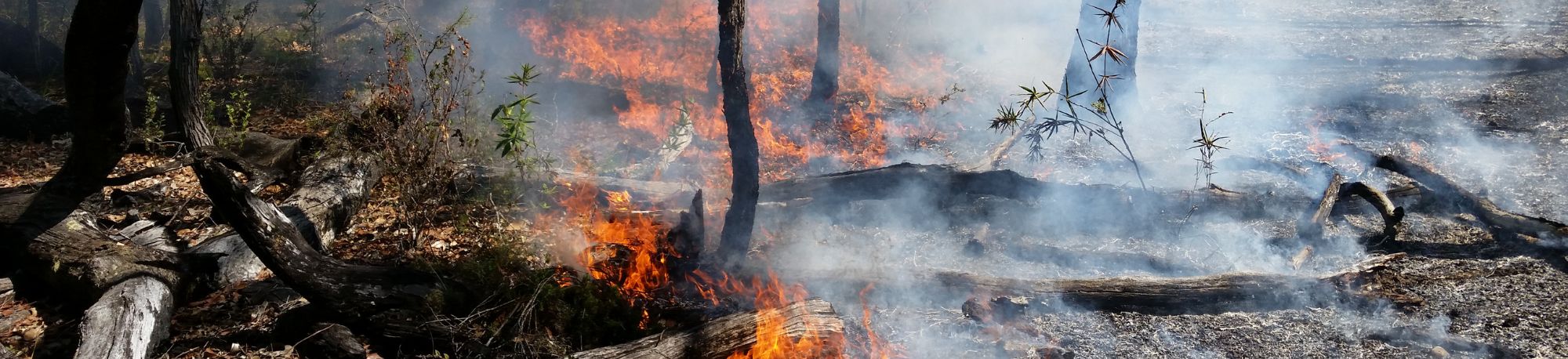
Wildfires occur in Australian forests almost every year, with the number of major wildfires and the area burnt increasing in years when there is above average fire danger, which usually corresponds with periods of prolonged drought. However, due to well managed fire suppression arrangements, only a small proportion of wildfires are unable to be extinguished while small and then burn at high severity and cause most of the impacts on life, property and the environment. Wildfire behaviour, including both the rate of spread and the intensity at which a fire burns, is dependent on three main factors: the quantity and structure of available fuel in the vegetation; the prevailing weather (particularly temperature, wind and humidity); and the topography at the location of the fire. Therefore, the severity of a wildfire at any point in the landscape is a result of many interacting factors, not a single factor such as whether or not timber harvesting has been undertaken in that location.
Professor Lindenmayer’s claim that timber harvesting makes forests more flammable arises from research published in 2014[1], that examined fire severity outcomes in different aged Eucalyptus regnans forests that were burnt in the catastrophic 2009 Victorian Black Saturday wildfires. The researchers analysed post-fire remotely sensed fire severity data, focusing on two categories of high severity fire: canopy consumption, where 70-100% of tree canopies were burnt; and canopy scorch, where 60-100% of the canopies showed scorched leaves. From their analysis, they claimed that there was a 70% chance of 15-year-old stands being burnt at high severity with total canopy consumption and that canopy consumption rarely occurred in old growth stands aged around 300 years. From this they concluded that the stands regenerated following logging had made those forests more flammable.
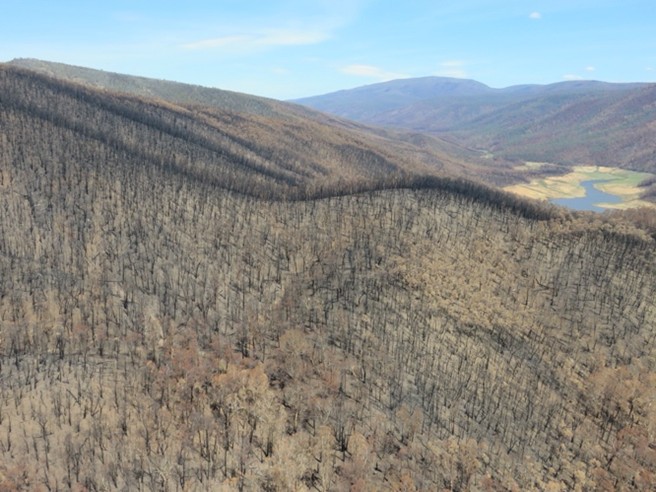
The manner in which the data was analysed and reported casts significant doubt on the validity of their finding that timber harvesting increases forest flammability. To arrive at their conclusions, the researchers selectively used the findings from their analysis of the probability of tree crowns in different aged stands being completely consumed by fire, whereas they ignored their alternative analysis of the probability of tree crowns being completely burnt or completely scorched. That alternative analysis showed a 95% probability for young stands and an 80% probability for the 300-year-old stands, thereby indicating that the old growth stands also had a very high probability of being burnt by high severity fire. When these fire-sensitive eucalypt trees either have their crowns completely burnt or completely scorched the trees are killed. Alternative research, from adjacent areas of water supply catchment where timber harvesting has never occurred, found that much of the mature (100-200 years) and senescing (>200 years) E. regnans forest was killed by the 2009 wildfire. Clearly the absence of timber harvesting in these old growth forests did not reduce the probability of them experiencing a high severity stand replacing wildfire event.
 |
 |
|---|---|
| Ash eucalypt killed by high severity fire | Long unburnt forest burnt at high severity |
In New South Wales, the 2019-20 bushfires burnt about 4.1 million hectares of forest, which included 2.23 million hectares of National Park and 0.76 million hectares of State forest. Within the areas of burnt State forest, timber harvesting had been undertaken in about 0.21 million hectares during the previous 35 years. Data published by the NSW Department of Primary Industry indicated that about 53% and 50% of forest burnt at high and extreme fire severity in National Parks and State forests respectively. They concluded that, at the landscape scale, fire severity was much the same regardless of tenure and in State forests it was not influenced by previous timber harvesting.
Australia’s, largest ever mega fire occurred in 2019-20 within the conservation reserves that make up the Greater Blue Mountains World Heritage Area in New South Wales. That fire burnt over 855,000 hectares (79% of the total area), of which about 37% was burnt at high or extreme severity. Timber harvesting did not have any impact on fire severity as this World Heritage Area is mostly wilderness, with only very small areas previously subject to timber harvesting in the early period of colonial settlement. Also, in the areas that had been subject to prescribed burning in the 5 years before the mega fire only 26% of those areas were burnt at high or extreme severity, indicating that prescribed burning lessened the likelihood of the forests burning at high severity.
In Eastern Victoria, the 2019-20 wildfires burnt about 1.5 million hectares, of which about 89% was public forested land, that included 486,000 hectares of National Park and 403,000 hectares of areas of State forest where timber harvesting was occurring. Data produced by the Victorian Government showed that about 48% of the areas burnt in National Parks burnt at high severity and about 49% of the areas where timber harvesting was permitted burnt at high severity. Given these factual fire severity results and the landscape scale of these different land tenures, it is clear that the presence or absence of timber harvesting made little difference to the extent of high severity wildfire. Yet this is the same region where fire severity research published in 2021[2] by Professor Lindenmayer claims to have found that areas subject to major disturbance such as timber harvesting have an increased risk of experiencing high severity wildfire.
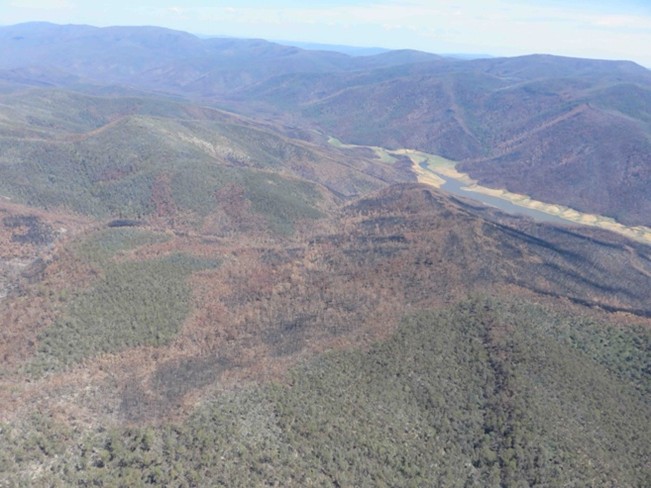
In the Australian Capital Territory, large intense wildfires occurred in both 2003 and 2020. The 2003 fire killed 4 people, destroyed 510 houses in and around the capital city Canberra and burnt more than 91% of Namadgi National Park, that covers about 100,000 hectares of forested land to the west of Canberra. The 2020 fire burnt 80% of Namadgi National Park, with about 90% of the burnt areas coinciding with areas that had been severely burnt in the 2003 fire. No timber harvesting has occurred within this National Park for about 60 years, yet about half of the area burnt at high intensity. Significantly, the 2020 fire burnt through a large area of sub-alpine forest that had not previously been burnt by either wildfire or prescribed fire for well over 50 years. The outcome was that almost all of that forest was burnt at high severity with all of the tree canopy foliage being completely burnt. Conversely, some areas that had been burnt by prescribed fire within the past five years, were burnt at low severity, with all of the tree canopies retaining healthy green crowns.
 |
 |
|---|---|
| No prescribed burning – high severity fire | Prescribed burnt areas – low severity fire |
In 2024 Lindenmayer and Zylstra published a review[3] of selected global literature on the role that disturbance (including fire, timber harvesting, clearing or windthrow) can play in increasing the severity and spatial contagion, which they termed flammability, of wildfires in woody ecosystems. Much of this review paper relied on their previous published articles on the impact of timber harvesting or prescribed fire on eucalypt forest flammability. They did not quote any of the extensive literature that showed a reduction in fire severity in areas where prescribed burning had been conducted. Zylstra’s research, published in 2022[4] and 2023[5], focused on a single forest type in Western Australia, observing that fire promotes dense flammable understorey vegetation and then modelled a reduced fire risk, associated with natural thinning of forest understoreys, when fire was excluded for 56 years. Given the great variation of Australian forest types, their findings should not be generalized to cover all Australian native forests.
Following the disastrous 2019-20 wildfires in New South Wales and Victoria, a major study was undertaken to test the effectiveness of prescribed burning at a landscape scale in terms of reducing the severity of the wildfire in a wide range of forest ecosystems. That study examined 307 prescribed burns greater than 200 hectares in size that had been conducted in the previous five years and which were within the footprint of the 2019-20 wildfires. It found that about half (48%) of these prescribed burns resulted in significantly decreased wildfire severity. It also found that the more recent prescribed burns had a more positive impact on reducing fire severity, with 66% of one year old burns having a positive impact compared to 42% of five-year-old burns.
 |
 |
|---|---|
| Site prescribed burnt every 3 years | Unburnt control site |
None of the claims made by Lindenmayer and Zylstra about the impact of prescribed burning on forest flammability are supported by evidence from long-term monitoring of replicated trials where prescribed burning has been conducted. In contrast, the late Associate Professor Kevin Tolhurst studied the effects of repeated low-intensity prescribed fire in mixed species eucalypt forest in south-eastern Australia using replicated trials (including no-burning sites) for almost 40 years. He found that there was no loss of species but the impact of on understory plant species varied according to the nature of different species. My own observations at these research sites in October 2024 indicated that there was significantly less understorey vegetation in the repeatedly burnt sites than in the unburnt control sites – which contradicts the Lindenmayer-Zylstra view that prescribed burning in eucalypt forests promotes dense flammable understorey vegetation.
Clearly the greatest risk to Australian native forests is the increased frequency of landscape-scale wildfires burning at high intensity, which will ultimately change the composition and structure of our forest ecosystems. The lived experience evidence clearly shows that timber harvesting is not increasing the risk of native forests being burnt at high severity. Far from being a cause of increased high severity fire, prescribed burning reduces fire severity in many forest areas where it has been undertaken. Prescribed burning is regarded by all Australian governments and the Australian Fire Authorities Council as an essential strategy for achieving multiple outcomes in forests, reducing wildfire risks to life and property, and maintaining the health of forest landscapes in Australia. With the increased frequency of landscape-scale intense forest fires in Australia, it is critical that every effort is made by forest land managers to increase the implementation of strategically planned prescribed burning throughout forest landscapes to create both a mosaic of fuel ages and areas where indirect fire suppression strategies can be implemented safely if rapid initial suppression efforts fail.
References that support the views
Attiwill, P. M., Ryan, M. F., Burrows, N., Cheney, N. P., McCaw, L., Neyland, M. and Read, S. (2014). Timber harvesting does not increase fire risk and severity in wet eucalypt forests of southern Australia. Conservation Letters 7 (4) 341-354
Bowman, D., Williamson, G. J., Gibson, R. K., Bradstock, R. A. and Keenan, R. J. (2021). The severity and extent of the Australia 2019–20 Eucalyptus forest fires are not the legacy of forest management. Nature Ecology and Evolution 5, 1003–1010
Hislop, S., Stone, C. Haywood A. & Skidmore, A. (2020). The effectiveness of fuel reduction burning for wildfire mitigation in sclerophyll forests. Australian Forestry 83 (4) 255-264
Keenan, R. J., Kanowski, P., Baker, P. J., Brack, C., Bartlett, T. & Tolhurst, K. (2021). No evidence that timber harvesting increased the scale or severity of the 2019/20 bushfires in southeastern Australia. Australian Forestry, 84, 133–138
McCaw, L. (2024) Mechanisms by which growth and succession limit the impact on fire – a comment on Zylstra et al.’s model. Functional Ecology 38 (11) 2320-2322
Miller, B. P., Fontaine, J. B., Tangney, R., McCaw, L., Cruz, M. G. and Hollis, J. J. (2024) Comment on ‘Self-thinning forest understoreys reduce wildfire risk, even in a warming climate”. Environmental Research Letters 19 068001
[1] Taylor, C., McCarthy, M. and Lindenmayer, D. B. (2014) Nonlinear effects of stand age on fire severity. Conservation Letters 7 (4) 355-370.
[2] Lindenmayer, D. B., Taylor, C. and Blanchard, W. (2021) Empirical analyses of the factors influencing fire severity in south-eastern Australia. Ecosphere 12 (8): e03721.
[3] Lindenmayer, D. and Zylstra, P. (2024) Identifying and managing disturbance-simulated flammability in woody ecosystems. Biological Reviews 99 699-714.
[4] Zylstra, P. J., Bradshaw, S. D. and Lindenmayer, D. B. (2022) Self-thinning understoreys reduce wildfire risk, even in a warming climate. Environmental Research Letters 17 (4) 044022
[5] Zylstra, P. J., Wardell-Johnson, G. W., Falster, D. S., Howe, M., McQuoid, N., & Neville, S. (2023). Mechanisms by which growth and succession limit the impact of fire in a south-western Australian forested ecosystem. Functional Ecology 37, 1350–1365.
This article was originally published in the Commonwealth Forestry Association Newsletter March 2025 and has been republished with permission.